If you searched for live binary options signals on Skype, you almost certainly landed on a page written years ago: a paid "trading room," a screen-share mentor, a Skype ID to add. The pages are still indexed, the promises still read as present-tense, and nothing on them tells you whether any of it still runs.
Here is the short version before you hand anyone a contact ID or a payment: Skype itself no longer exists as a consumer product. That single fact settles the question, and everything below explains what the model used to look like, why traders had already left it, and where live delivery genuinely happens now.
Key Takeaways
Consumer Skype was retired on 5 May 2025 and folded into the free version of Microsoft Teams, so a "live Skype signals room" cannot function as advertised.
Skype delivery was always manual — spoken calls, screen-share walkthroughs and hand-typed chat posts — with no bot layer to auto-post signals.
Traders had already left before the shutdown: no public channel discovery, no broadcast mode, no timestamped history to audit a track record, and speaking is slow on short expiries.
Any Skype signal ad you find today is stale content, a dead endpoint, or a redirect that moves you to Telegram or WhatsApp once you make contact.
Table of Contents (12 min read)Contents
Does Skype Still Work for Live Binary Options Signals?
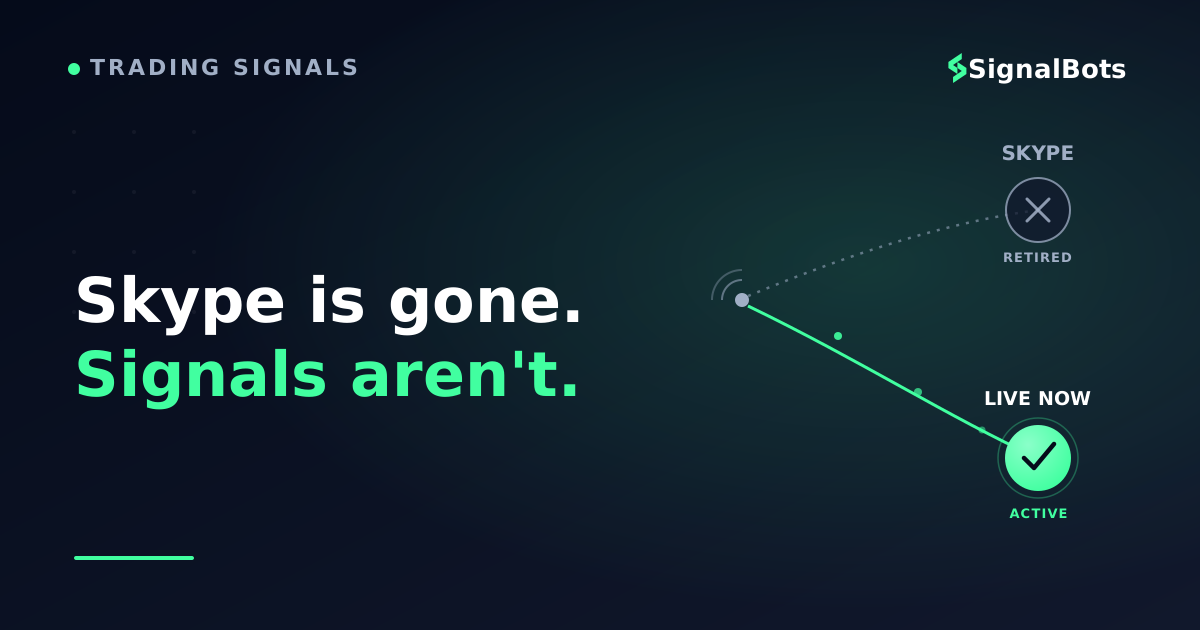
No. Microsoft retired consumer Skype on 5 May 2025 and folded its users into the free version of Microsoft Teams. There is no Skype app to install, no Skype call to join, and no Skype group chat for a provider to post into. A "live binary options signals Skype room" cannot function as advertised, because the room's transport layer was switched off.
Timeline
Skype era
Voice rooms, screen-share walkthroughs and hand-typed chat carried binary options signals for years.
Bots pull traders away
Telegram's automated posting and public channels start winning the migration years before Skype closes.
5 May 2025: retired
Microsoft shuts down consumer Skype. No app, no call, no group chat left to post a signal into.
Folded into Teams
Skype accounts move into free Microsoft Teams — a workplace tool, not a signals platform.
Skype's signal-delivery model lost ground to bot-posted channels for years, then lost its transport layer entirely on 5 May 2025.
That makes any page still advertising a Skype signal service one of three things:
Stale content — a review, ad or blog post published before the shutdown and never updated. Most of what ranks for this phrase is exactly this.
A dead endpoint — the provider stopped operating long before Skype did, and the listing simply outlived them.
A bait-and-switch — the ad keeps the "Skype" wording because the phrase still gets searched, but the moment you make contact you are moved to WhatsApp, Telegram or Teams.
None of the three is a reason to send money. The first two waste your time; the third means the seller is comfortable advertising a channel they know is gone, which tells you something about the rest of their marketing.
How Skype Signal Delivery Used to Work
Reading the old promotional pages is more useful if you know exactly what they were describing. A binary options signal is a short, time-boxed instruction — an asset, a direction, and an expiry — and Skype carried it in four recognisable formats.
Live voice or video rooms. A signal provider hosted a call during a session window and read setups aloud as they formed: "EUR/USD, put, one-minute expiry, take it now." Subscribers sat on the call, muted, executing on their own broker platform.
Screen-share chart walkthroughs. The higher-priced groups leaned on this. The host shared a charting window so subscribers watched the setup being marked up in real time — support levels drawn, a candle awaited, the call made on-screen. It was genuinely good teaching format, which is why it commanded a premium over a plain signal list.
Manual chat posting. A group chat where the provider typed each signal by hand, sometimes pasting a chart screenshot beside it. No formatting standard, no automation — just a person typing fast enough to beat the entry window.
One-to-one mentoring. The smallest and most expensive tier: a direct Skype contact with a trader who called setups for you personally and answered questions between them.
All four shared one property worth naming: a human being was the delivery mechanism. Every signal passed through someone's mouth or keyboard before it reached you. Skype signal delivery ran through a person's voice or keyboard for every single call — the exact bottleneck automation was built to remove.
Why Skype Signal Groups Declined Before the Shutdown
The retirement finished off a model that had already been losing ground for years. The reasons were structural rather than reputational, and they are why nobody rebuilt Skype-style rooms on Teams afterwards. Skype never gave signal providers a workable way to have software post into a group, so a person typed or spoke every call — and on a sixty-second expiry, signal latency is the whole game, because a call that still has to be composed as a sentence can land as a stale signal. The rest followed from the same manual, private design: nothing to browse or compare before joining, no separation between the provider and a room full of cross-talk, and no public post history, which left a group's historical win rate as whatever the seller said it was. A verified track record needs timestamped public entries, and a private call produces none.
Set that against a public Telegram signal channel and the head-to-head is one-sided on every axis that decides whether a call reaches you in time to act on it.
Skype vs Telegram
What decides delivery
Skype (manual room)
Telegram (bot-posted channel)
Automation
None — every signal typed or spoken by a person
Bot-posted the instant a strategy fires
Speed on short expiries
A spoken call has to be formed as a sentence first
Arrives already formatted, no composing delay
Discoverability
Contact-request only, nothing to browse or compare
Public link, searchable, forwardable
Broadcast mode
Group chat with no provider/audience separation
Broadcast-only, no cross-talk burying the call
Auditability
No public post history to check
Timestamped public entries anyone can scroll
On every axis that decides whether a signal reaches you in time, the manual Skype room loses to a bot-posted public channel.
The shutdown was the last nail, not the cause of death.
What Happened When Skype Retired, and What Replaced It
Microsoft's stated path was Teams, not a Skype successor. If you still have an old Skype-based provider relationship, this is what became of it.
Your Skype credentials sign you into the free version of Microsoft Teams — no new account required — and Microsoft transferred existing chats and contacts across for accounts that made the move within the migration window. There is also a data-export route for people who wanted their history off the platform rather than inside Teams. Remaining paid balances kept a limited life through the Skype Dial Pad, but new credit purchases ended with the product.
For a signal relationship specifically, that means one of two outcomes. Either the provider migrated with everyone else and your old contact now resolves to a Teams chat, or the provider was already gone and the contact resolves to nothing at all. It is worth checking which, because a genuine long-standing provider who moved will be easy to re-establish contact with through the channel they publish today.
One caveat, and it matters: Teams inheriting Skype's users is not the same as Teams becoming a signals platform. It is a work-collaboration tool built around organisations and scheduled meetings, and there is no meaningful ecosystem of binary options providers delivering through it. Treat it as where your old conversations went, not as the new place to receive trades.
What To Do If You Still See a "Skype Signals" Group or Ad
You will keep meeting these listings for years, because stale pages outlive the products they advertise. A few checks resolve them quickly.
Date the page. Look for a publication or update date. Anything from before mid-2025 is describing a world where Skype existed, and its claims should be read in the past tense regardless of how the copy is phrased.
Treat a live Skype ID as a tell. A provider still publishing "add me on Skype" as their primary contact has not audited their own marketing since the shutdown. That is a maintenance signal about the whole operation, not a small oversight.
Expect the redirect, and watch how it is handled. Being moved to Telegram or WhatsApp is not automatically sinister — it may just be where a real provider now works. What matters is whether they say so openly or let you believe the Skype room still exists until you have paid.
Never pay into a channel you have not seen deliver. Before money moves, you should have watched real signals arrive, on the platform they are actually delivered on, for long enough to judge them. Any group that wants payment before you observe a single live post is selling access to an unproven claim.
Keep the risk frame. Short-expiry binary trading carries a real chance of losing your capital regardless of who is calling the entries — our full risk warning applies to any signal you act on, from any source.
The broader question of vetting a signal group's legitimacy — payment structures, broker affiliation, track-record proof — goes wider than the Skype story and deserves its own checklist.
Where Live Binary Options Signals Actually Work Today
The need behind the original search has not changed: you want a call to reach you fast enough to act on before the entry window closes. The delivery channels that carry live binary signals today all share the property Skype lacked — none of them needs a human to read a setup aloud before it reaches you.
Public Telegram channels absorbed most of that traffic almost one for one: broadcast-only posting, bot-generated messages, and a timestamped history you can scroll before you subscribe to anything. Mobile apps solved the part the Skype call never could, since a push notification alert reaches you whether or not you are sitting in front of a screen. And platform-side connectors take the delivery step out of human hands entirely by placing the trade on the broker platform itself — the logical end point of the trend that started when providers stopped typing signals by hand.
The closest direct equivalent to what the Skype room was actually for is a live web feed you can simply watch. Our live binary options signals feed shows current signals as they fire, with the asset, direction and expiry already formatted, so you are reading a page rather than sitting on a call waiting for someone to speak. It is a feed, not a community: if what you valued about Skype binary options signals was the mentoring, the screen-share teaching and the conversation with other traders, a feed will not replace that, and a discussion-oriented Telegram or Discord community is the better fit.
Bottom Line
Skype is not a slow or risky way to receive binary options signals. It is not a way to receive them at all — the platform was retired on 5 May 2025 and its users were moved to Microsoft Teams, which no meaningful signal ecosystem uses. Every page still selling a Skype room is describing something that stopped being possible.
The model those pages describe was real once, and it had a genuine strength worth remembering: a human explaining a chart while marking it up teaches more than a formatted message ever will. But it lost to automation on the thing binary options actually reward, which is speed to the entry — and then it lost its transport layer entirely. Judge live delivery today on latency, on whether the history is public and timestamped, and on whether you can watch it work before you pay for it.
FAQ
Can I still join a Skype binary options signals group in 2026?
No. Consumer Skype was retired on 5 May 2025, so there is no application to sign into and no group chat or call for a provider to host. Any listing offering one is stale content or a redirect to a different messaging platform under an old name.
Did Skype signal groups ever use automated bots?
Not in the way Telegram channels do. Skype never gave signal providers a practical way to have a strategy engine post directly into a group, so signals were typed or spoken by a person. That manual step is the main reason the model could not keep up on short expiry times.
My provider says their Skype group moved to Microsoft Teams — should I follow?
Following the migration is technically legitimate, since Microsoft did route Skype accounts into the free Teams tier. But Teams is a workplace collaboration tool with no real signals ecosystem around it, so a provider delivering there is an outlier. Judge them on whether you can observe live delivery before paying, not on which app they name.
What replaced the screen-share teaching sessions Skype was good for?
Live-streamed sessions on video platforms, and voice channels in Discord or Telegram, cover the same ground with better recording and replay. That teaching format is separate from signal delivery — treat learning to read a setup and receiving a timed entry as two different services, and do not pay for one expecting the other.
Is a Telegram channel genuinely faster than a spoken Skype call was?
Structurally, yes. A bot-posted message is formatted before it is sent and arrives complete, while a spoken call has to be composed as a sentence, heard and interpreted. On a one-minute expiry, the difference between those two paths is a meaningful share of the window you have to act in.
Sources & Further Reading
Want to go deeper? These independent, authoritative sources shaped this guide — each one is worth reading in full:
The Binary Options Desk is the SignalBots editorial team for fixed-time and OTC trading coverage. We research and write the guides that explain expiry timing, payout structure and disciplined entry across the major brokers.



Discussions 0
Leave a comment