Prop Firm Tools

Prop Firm Challenge ROI Calculator

Decide if a challenge is worth paying for. Weigh the fee against the payout you'd actually keep and your honest odds of passing, and see the expected return before you buy in.

$500

What you pay upfront to attempt the challenge.

$100,000

The funded balance you'd trade once you pass.

8%

The profit you make before the first payout.

80%

The share of profit that's paid out to you.

30%

Your honest odds of passing and reaching a payout.

Expected Value $1,420.00

Positive expected value at this pass rate.

Payout If You Pass$6,400.00
Net If You Pass$5,900.00
Break-even Pass Rate7.8%

For educational purposes only. Read our risk warning before trading.

The Math

How the Expected Value Is Calculated

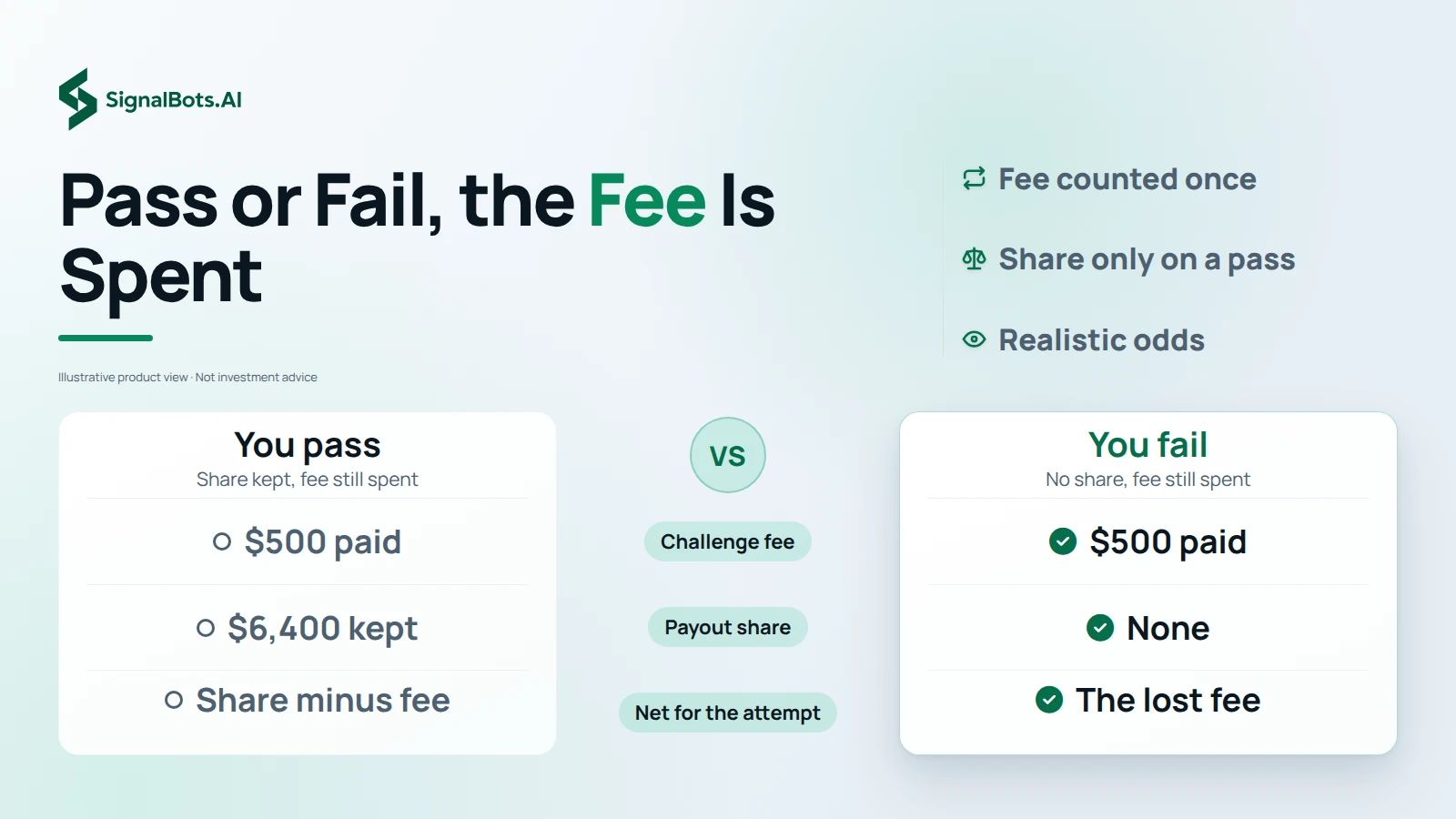
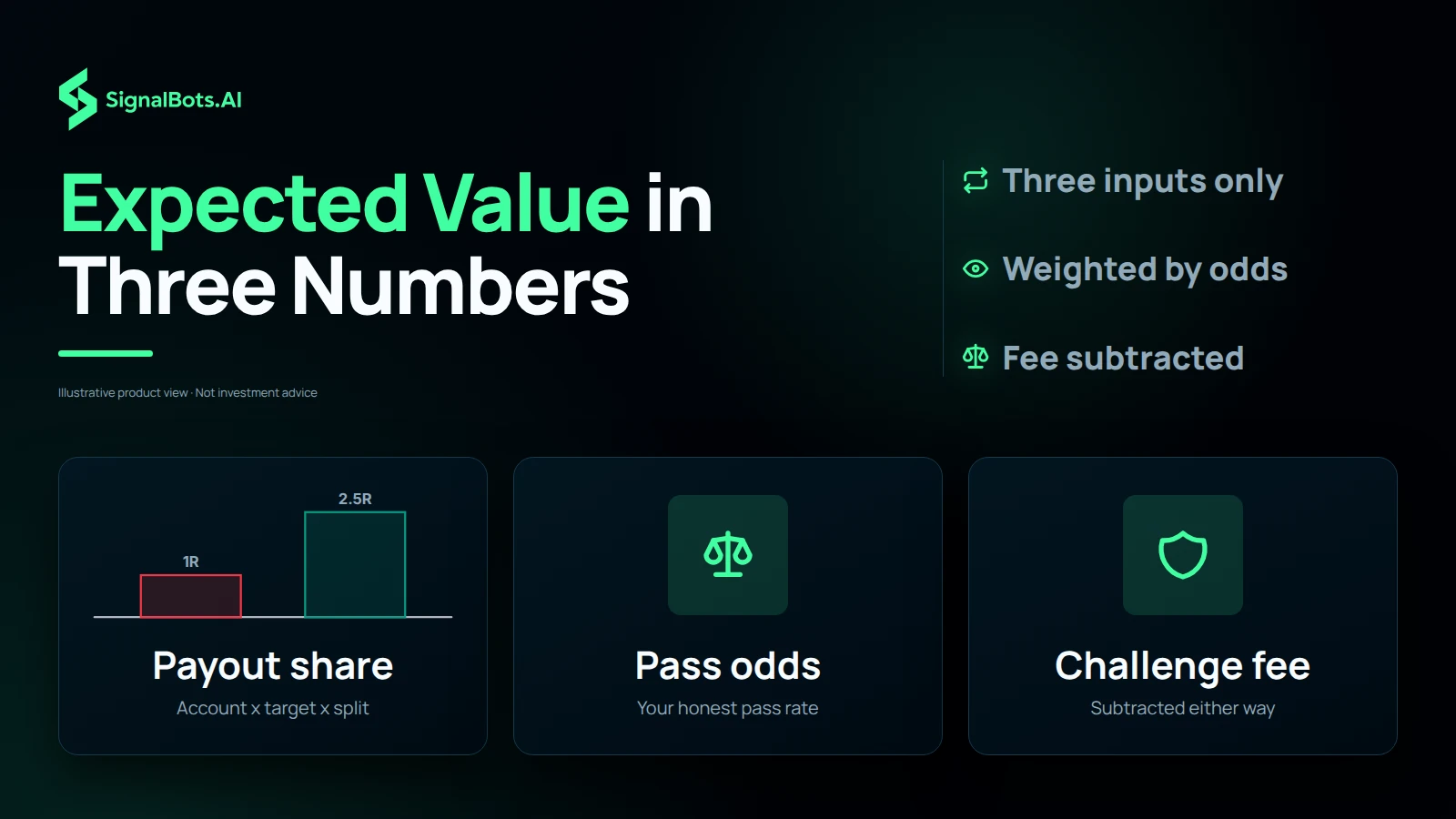
First find the gross profit you'd make before a payout: account size times your profit target. Multiply that by the split you keep to get your payout. The expected value weighs that payout by your odds of passing, then subtracts the fee you pay either way — because the fee is spent whether you pass or fail.

Quick Reference

Terms In This Calculator

ConceptWhat it means
Expected valueThe average outcome weighted by your pass odds — what one attempt is worth on average.
Break-even pass rateThe pass percentage where expected value equals zero. Above it the math favours you; below it, it doesn't.
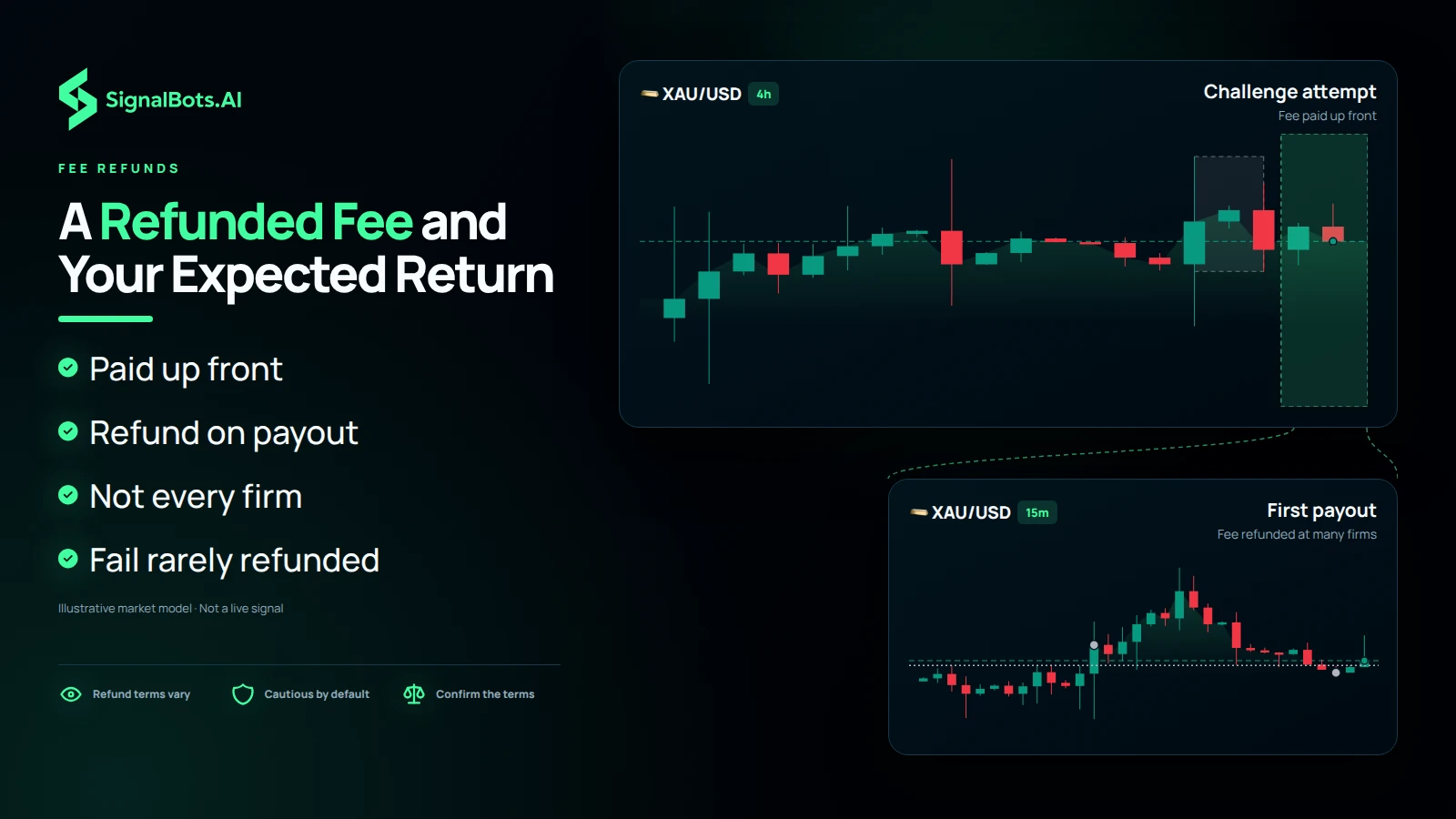
NoteMany firms refund the challenge fee on the first payout, which improves the real expected value.

Frequently Asked Questions

Is a prop challenge worth the fee?

It depends on your honest pass odds and the split. A challenge has positive expected value only when your chance of passing clears the break-even pass rate this tool shows. Be realistic: most traders overestimate their odds, and the fee is spent whether you pass or fail.

What is expected value here?

It's the average result of taking this challenge many times, weighting your payout by your odds of passing and subtracting the fee you always pay. A positive figure means the attempt pays off on average; a negative one means the fee outweighs the expected payout.

What pass rate breaks even?

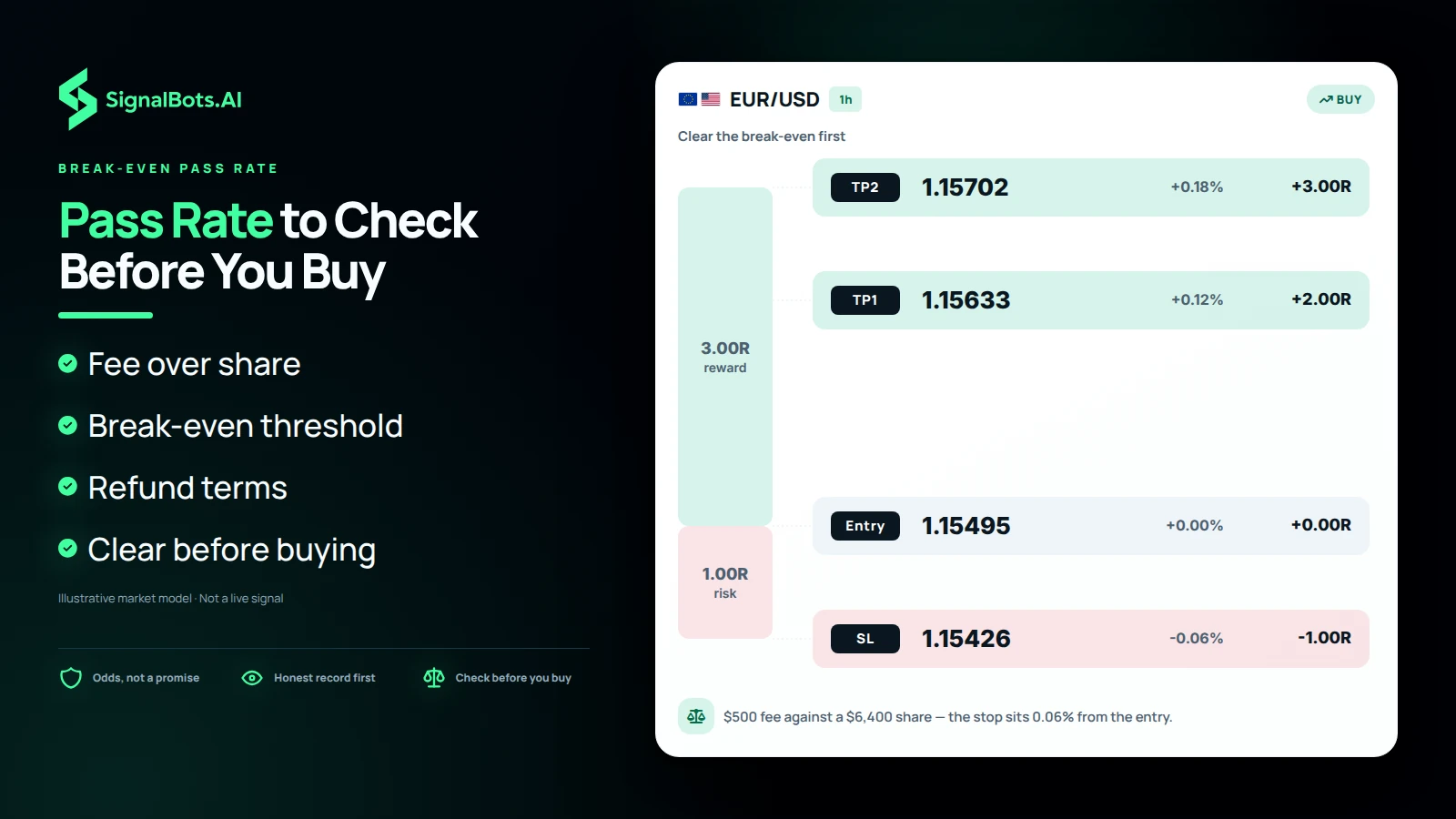
The break-even pass rate is the fee divided by the payout you'd keep. In the default example, a $500 fee against a $6,400 share breaks even at 7.8%. Pass more often than that and the math favours you; pass less often and you lose money over time.

Is the fee refundable?

Many firms refund the challenge fee on your first payout, but not all do, and a failed attempt is rarely refunded. This tool treats the fee as a cost you pay either way. If your firm refunds it on success, your real expected value is a little better than the figure shown.